
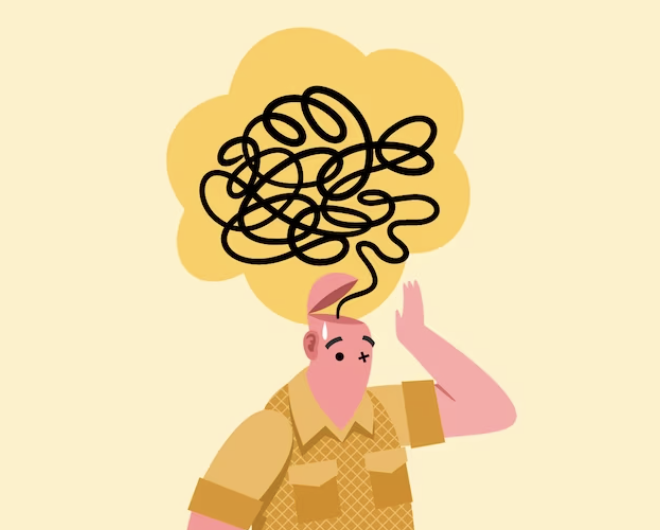
What’s the best way to overcome anxiety?

What’s the best way to overcome anxiety?

Anyone who has ever felt anxiety (which pretty much includes all human beings) knows how uncomfortable it can be. In this episode of “Ask a Psychiatrist” we learn about our internal early-warning systems and what it means when our bodies and minds cascade into something more than experiencing the ordinary stressors of everyday life.

Dr. Erik Messamore explains that anxiety usually consists of two separate but intertwined processes – the physiological “fight or flight” reaction AND a host of thoughts that usually involve forecasting something bad in the near or distant future.

The good news for those of us locked in worry, tension, or panic is that scientists have been studying anxiety for over 100 years. We have a lot of knowledge about anxiety – not only how it works but also how to treat it.

Covering both the physiological and psychological elements, Dr. Messamore breaks down the impacts of anxiety on the body as well as the thought patterns that can heighten those symptoms. He provides a framework for examining some of the successful behavioral interventions available as well as thoughts about the role of drug treatment options.

Click here if you’d like to ask a question or suggest a topic to address in a future episode.

If you’ve found this information helpful, please share it with your network!

KEY TAKEAWAYS:

  • (01:35) – Anxiety is a normal emotion – even helpful, despite often being uncomfortable.
  • (02:56) – Some of the physical symptoms that signal anxiety:
    • An uncomfortable, almost painful feeling of apprehension.
    • Heart racing and difficulty catching one’s breath.
    • Muscle tension and hyper-vigilance (which often extends to interrupting sleep).
    • Feelings of nausea, urgency to urinate or empty one’s bowels.
  • (04:26) – About thoughts that can either result from or precipitate anxiety:
    • Ruminating on or catastrophizing about the future.
    • High alert signals reach the brain and start a loop to justify the feeling.
  • (07:24) – Anxiety involves two components:
    • Physiological: Preparing the body to fight or flee.
    • Thought: Drives or explains to the brain why this feeling exists.
  • (08:00) – Anxiety is relatively easy to study because reliable, inexpensive instruments are available to study symptoms, which are mostly objectively measurable and observable.
  • Three strategies for treating anxiety:
    • (10:13) – Cognitive Behavior Therapy (CBT): Offers tools to short-circuit anxious thoughts and physical reactions by redirecting responses that do not serve and tend to get locked into a negative loop.
    • (17:10) – Systematic Desensitization: Some common phobias/anxieties may be hard-wired biologically and can be overcome by systematically titrating exposure to that which is threatening or fear-inducing. (Dr. Messamore shares detailed, vivid examples of this technique.)
    • (22:46) – Exposure and Response Prevention Therapy: A treatment that identifies stressors in the brain and then subtly interrupts any source of reward/relief, initially causing discomfort but incrementally helping to build tolerance and new ways to manage anxiety.
  • (27:12) – There are drug treatment options available as an alternative to behavioral therapies. In some cases they can modulate or block reflexive physiological symptoms so that patients can develop adaptive strategies for coping with stressors.
  • (31:13) – A bit about SSRIs (selective serotonin reuptake inhibitors) that are sometimes prescribed to get physiological responses in the body under control and opening the possibility of treating underlying psychological/emotional issues.
  • (32:05) – Dr. Messamore explains that there are various approaches to treating anxiety, including the effective use of cognitive behavioral and drug treatment programs in combination.   

QUOTABLE:

  • “(An anxiety disorder) can begin to take on a life of its own. It goes from something that is really annoying to something that can have the emotional power of a monster that wants to devour you.”
  • “When your heartbeat starts to accelerate in response to a thought, then we have a scenario that I call ‘The Feel Makes It Real.’ ”
  • “Anxiety is a universal human experience. It’s extremely uncomfortable.”
  • “People who are anxiety-prone and suffer from anxiety disorders overwhelmingly … look into the future and provide a negative outcome. And thoughts drive emotions.”
  • “Some people find that the physiological response of the body is just so overpowering that using psychological skills has limited value or almost no value at all.”
  • “Medicine can be very helpful and the choice to use medicine or the decision about what is the right time is deeply personal.”
  • “For most people it’s ideal to use medicines that can control physiological response in combination with proven, evidence-based psychological therapies because the two of them feed from each other … It accelerates the program.”
  • “The good news is that anxiety has been studied longer and probably better than any other mood state in humans. We have a lot of techniques that can be very effective and have been proven.”

Why Don’t Antidepressants Work for Me?

Why Don’t Antidepressants Work for Me?

Why do anti-depressants seem to work well for some and not at all for others? In this episode of Ask a Psychiatrist, Dr. Erik Messamore takes on this question, offering practical information about the multi-faceted nature of depression and factors to consider in choosing from a range of treatment options.

A clinician has more than half a dozen pathways to think about the cause of high blood pressure, each with its own family of medications available as possible treatments. But when it comes to depression? It’s treated as a one-size-fits-all monolith – as if there are no variants or factors specific to the affected individual. Dr. Messamore has a different take, explaining the range of biological, environmental, social, and even spiritual variables that are relevant to mood.

As a first step, Dr. Messamore underscores how important it is for patients, their families and most of all clinicians to put on a Detective’s Hat: Keep track of symptoms and the progression of treatment; consider having a personality assessment done to better understand the individual’s unique psychological landscape and tendencies; take a pro-active approach to researching and considering alternatives to a bio-chemical approach. When it comes to treatment options, they are as diverse as the nature of depression itself, which is why this episode of Ask a Psychiatrist not only describes some common types of depression but also an array of clinical strategies to augment or replace anti-depressant medications.

Dr. Messamore also breaks down how drugs affect particular neurotransmitters and why Evidence-Based Psychotherapy can be a highly effective tool for responding to depression – especially those that are not genetically based. With the incidence of depression on the rise nationally, generation over generation, it’s very likely that you or someone you love will encounter the complex and constantly evolving field of psychiatry. Dr. Messamore is here to answer questions and provide information about mental illness and general wellness.*

*Advice provided by the host is not addressed to any specific person or personal situation. If you are experiencing a health emergency, please consult a physician. Click here to view a relevant video in which Dr. Messamore offers additional thoughts on this topic. Click here if you’d like to ask a question or suggest a topic to address in a future episode. If you’ve found this information helpful, please share it with your network!

KEY TAKEAWAYS:

  • (01:40) – Depression is not a single disease as defined by one set of symptoms or a single remedy. It’s has many causes, and many treatment options.
  • (06:31) – Some people respond to anti-depressants because they’re experiencing a genetic deficiency in one of their neurotransmitters, but anti-depressants might also be curative because they increase a general feeling of well-being that encourages resilience.
  • (10:10) – Why is it that – even with all the enhanced treatment options – the rates of depression keep going up and up?
  • (13:34) – Dr. Messamore cites some of the many contributory components of depression and some of the interventions available, such as: Anti-depressants targeting specific neurotransmitters such as serotonin, norepinephrine and glutamate. Transcranial Magnetic Stimulation Electro-Convulsive Therapy
  • (15:50) – It’s very important for people to know that serotonin isn’t the only treatment option out there.
  • (16:20) – Anti-depressants given at the right dose for the right period of time should lead to improvement. If the overall trendline is not towards relief, it’s worthwhile to revisit the treatment with your provider.
  • (18:28) – About Evidence-Based Psychotherapy and the use of personality or temperamental assessments in pinpointing/responding to depression.
  • (20:35) – Two symptom clusters that are typical in depression and can help guide bio-chemical treatment approaches: Melancholic Depression: Loss of appetite, sleep disturbance, mood variation that tends to improve as the day goes on. A-Typical Depression: Tendency to sleep a lot, eat a lot (especially carbs) and respond with unusual sensitivity to relationship stressors.
  • (25:11) – Dr. Messamore highlights some of the factors that can trigger a biological response and also play a role in the failure of bio-chemical treatments.
  • (29:29) – Some strategies to consider if you’re not getting the results you’d like from your anti-depressant medication: Establish what you’re looking for in terms of quality of life and track your moods to determine if progress is being made. If multiple treatment options have failed, assess which drugs have been tried, to what degree they’ve been effective and whether there are external environmental factors that might be affecting outcomes. Consider undergoing an assessment to see whether you’re one of a large subset of people whose personality or temperamental make-up undermines the efficacy of anti-depressants.  

QUOTABLE:

  • “We’re living in a time where we have more medication treatment options for depression than ever before … yet depression rates are growing. They’re going up and up.” “It’s important if you’re not getting good results from Treatment A or Treatment B to press the pause button with your doctor and talk about all the options.”
  • “The specific symptom cluster that we call Melancholic Depression might tip the scales in favor of assuming that biological factors are more relevant.” 
  • “The thing about perfectionism is that you can never achieve it. You can always envision something better than what you’ve currently got.”
  • “It’s really important for everybody involved – patients, their families and especially clinicians – to put on a Detective Hat as well as a Doctor Hat.”
How to reverse weight gain from antipsychotic medication?

How to reverse weight gain from antipsychotic medication?

This episode deals with the question of weight gain from antipsychotic medication: “I’m on 20 milligrams of olanzapine. It’s helping me and I don’t want to change it. The only thing is that I’ve gained a lot of weight which makes me feel very unattractive. I’ve spoken to my psychiatrist about it, but I haven’t gotten any guidance on the matter. Are there any solutions to weight gain from this kind of medicine?”

Modern antipsychotic medications can be very helpful for some people. And they are less likely to cause neurological side effects, compared to their first-generation predecessors. However, many of these newer medicines can cause someone to gain significant amounts of weight.

This is a serious problem that the psychiatric profession (in my view) has been very slow to address.

In this episode, Dr. Erik Messamore describes several strategies that can reduce the risk of medication-related weight gain or that can reverse weight gain once it has started.

Strategy 1. Choose antipsychotic medications with low weight gain risk

Different antipsychotic medications come with different degrees of weight gain risk.

Table 1 in this open-access medical journal article lists medications with higher or lower risk of weight gain. The graph in this article also illustrates the differences in weight gain risk among the various antipsychotic medications.

Strategy 2. Switch to an antipsychotic medication with lower weight gain risk

People who have gained weight from higher-risk medications – like quetiapine (Seroquel) or olanzapine (Zyprexa), for example – may lose weight after switching to a lower-risk medication.

On the other hand, some people (like the person who sent in today’s question) might mostly like their current medication, or may not want to take the risks involved in medication switching (e.g., the switched-to medication might not work as well, or might have other side effects). In situations like these, there are several weight loss options worth considering.

Strategy 3. Diet and exercise to reduce weight from antipsychotic medication

Many studies show that antipsychotic-induced weight gain does respond to standard diet or exercise interventions. A relatively small reduction of 150 calories per day can lead to about 16 pounds of weight loss over a year. For many people, that can be achieved by sticking to natural, whole foods and avoiding processed foods with a lot of carbohydrates or added sugars.

Exercise and physical activity can enhance weight loss. And numerous studies show that exercise can improve mood, reduce anxiety, increase cognitive performance, and reduce symptoms of psychosis.

Very low carbohydrate diets like the ketogenic diet are popular these days. These diets are designed to reduce insulin levels, which can make it easier to lose weight (because insulin is a fat-storage signal). Many people who undertake these diets can maintain calorie deficits without feeling hungry. Several case reports and a small clinical study suggest that the low-carb/ketogenic diet might help some people with schizophrenia, psychosis, or bipolar disorder to experience fewer symptoms.

Strategy 4. Metformin to reduce weight from antipsychotic medication

Metformin is a widely-used treatment for type-2 diabetes. It improves the body’s insulin signals and reduces spikes in blood sugar. Metformin can also help people without diabetes to lose weight. And there are many studies showing the metformin can reduce weight in people who have gained weight from antipsychotic medications.

Strategy 5. GLP-1 Agonists to reduce weight from antipsychotic medication

GLP-1 is an abbreviation for glucagon-like peptide 1. The GLP-1 agonist drugs mimic the action of natural GLP-1. They optimize the body’s insulin responses and reduce appetite. Some of these medications – liraglutide (Victoza, Saxenda); semaglutide (Ozempic, Rybelsus, Wegovy) – even have FDA approval for treating obesity.

Lirgalutide has been studied in weight gain from antipsychotic medication and appears to produce more weight loss than metformin.

Strategy 6. Melatonin might reduce weight gain from antipsychotic medications

This episode mentions that some studies show that melatonin might reduce the amount of weight gained from antipsychotic medication, while at the same time helping to further reduce symptoms of psychosis.

The studies referred to are:

Summary and suggestions

Although the psychiatric profession has been slow to respond to the problem of antipsychotic-related weight gain, there are several options that can reduce the risk of weight gain or that can help someone lose weight.

Many psychiatrists are aware of these options and are willing to help.

But in cases where the psychiatrist does not know about these options or does not have experience with prescribing medications to assist with weight loss, it’s likely that a general practice doctor or an endocrinologist does.

The goal of treatment is always to maximize improvement and to avoid side effects whenever possible. And in cases where side effects are unavoidable, the goal should be to minimize them as much as possible.

If you’re concerned about weight gain, there are options and solutions. Your health care provider should be able to address them, or refer you to someone who can.

Topics

0:44 This episode’s question is about weight gain from antipsychotic medication

1:20 – How common is the weight gain problem?

5:49 – Which medications are more likely (or less likely) to cause weight gain?

12:38 – How to these medications lead to weight gain?

15:27 – What are some strategies to prevent or reduce weight gain from antipsychotic medications?

20:56 – How effective is diet and exercise for antipsychotic-related weight gain?

26:28 – Suggestions for someone who is concerned about weight gain from antipsychotic medications.


Send us a question